From human-wildlife conflicts to a human-gorilla friendship

Ruhondeza, the gorilla that lives on in the hearts and minds of the Bwindi community

The Bwindi Impenetrable Forest is a national park in Uganda, an Important Bird & Biodiversity Area, and an Eastern Afromontane Key Biodiversity Area. The Critical Ecosystem Partnership Fund, through a small grant facilitated by BirdLife International, supports Conservation Through Public Health in their effort to reduce human-gorilla conflicts in and around the park, and avoid the transmission of diseases. This story describes how a potential drama turned into a unique friendship between local people and a legendary animal…

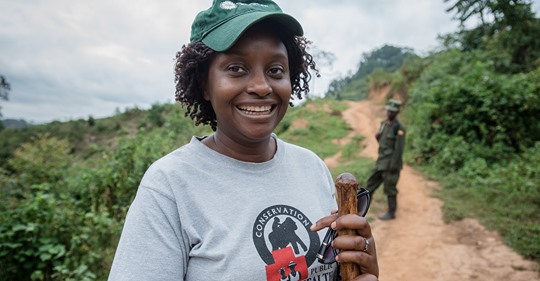
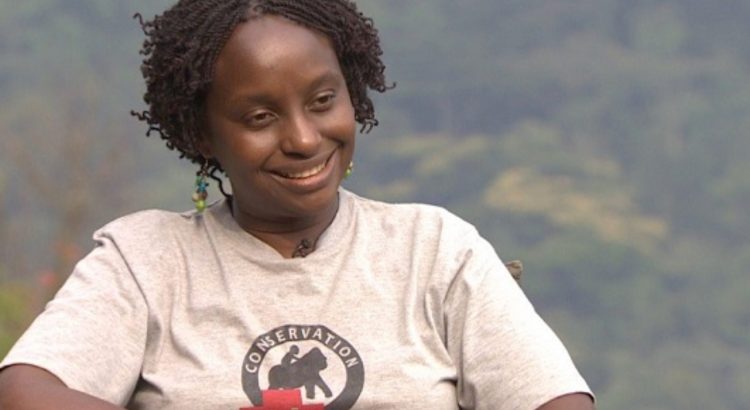
By Dr. Gladys Kalema-Zikusoka – Founder and CEO, Conservation Through Public Health (CTPH)

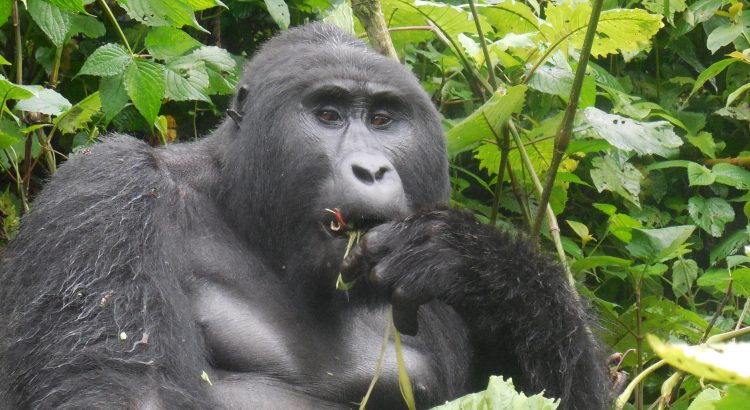
I have been working with mountain gorillas since 1994, when there were only two gorilla groups called Mubare and Katendegyere, habituated for tourism at Bwindi Impenetrable National Park. Now 25 years later, there are 17 gorilla groups habituated for tourism. Mubare gorilla group was headed by the silverback Ruhondeza, given that name because he liked “sleeping a lot”. Though Ruhondeza was smaller than the other silverbacks, he had the largest number of adult female gorillas to himself and was calmer than the Katendegyere gorilla group and therefore easier to habituate.

Katendegyere gorilla group eventually reduced in size, because there were too many males and only one female, and two years later the lead silverback, Mugurusi, meaning “old man” and named because he was very old when habituation began, eventually died of heart and kidney failure. I was called to check on Mugurusi when he could no longer keep up with the group and did a post-mortem on him a few days later. Fortunately, he did not have an infectious disease, however, a few months later his group developed scabies, a highly contagious skin disease more commonly known in animals as sarcoptic mange. This resulted in the death of the infant and sickness in the rest of the gorillas that only recovered after we gave Ivermectin anti parasitic treatments. The scabies was ultimately traced to people living around the national park who have inadequate access to basic health and other social services.


Kanyonyi, son of Ruhondeza © CTPH

In 2012, Ruhondeza also became too old, and he eventually could not keep up with the rest of his group. The Mubare gorilla group left him in search of food and he decided to settle outside the Bwindi Impenetrable National Park in community land. When the Uganda Wildlife Authority (UWA) park management called Conservation Through Public Health (CTPH) to look into the possibility of translocating Ruhondeza back to the safety of the forest, we checked on him and saw that he was really settled and even if we moved him back, he would likely return to community land. We spoke to our Village Health and Conservation Teams (VHCTs), volunteers who liaise between CTPH and their community, about tolerating Ruhondeza in the village – particularly since his calm and accommodating nature had enabled gorilla tourism to begin in 1993, changing the lives and future for many people in the Bwindi community for ever. In the meeting the VHCTs assured us that even when their own elderly become very weak, they look after them, so why should this not apply to Ruhondeza as well?.

This resulted in Ruhondeza being accepted in the Bwindi community where they tolerated him eating banana plants or the occasional coffee berry. When the fateful day came and Ruhondeza was laid to rest, the Bwindi community members all came to pay their last respects to a legend. To this day he is remembered through the Ruhondeza village walk and other community experiences and also through his son, Kanyonyi, who took over the Mubare Gorilla Group after he died. CTPH named the first blend of our Gorilla Conservation Coffee after him.

Ruhondeza truly signifies how far conservation efforts have paid off in Bwindi, and that true friendship between people and wild animals is, indeed, possible.

Watch Dr. Gladys Kalema Zikusoka talk more about how CTPH is working with local farmers to reduce threats to Endangered mountain gorillas around Bwindi Impenetrable National Park KBA 

BirdLife International runs the Regional Implementation Team (RIT) for the Critical Ecosystem Partnership Fund (CEPF) investment in the Eastern Afromontane Hotspot (2012 -2019). See the interactive map of all projects implemented under the CEPF Eastern Afromontane Hotspot programme here.

The Critical Ecosystem Partnership Fund is a joint initiative of l’Agence Française de Développement, Conservation International, the European Union, the Global Environment Facility, the Government of Japan and the World Bank. A fundamental goal is to ensure civil society is engaged in biodiversity conservation. More information on the CEPF can be found at www.cepf.net.

Please see original article as shared by Birdlife International Africa.

Gorilla Conservation Coffee Safari

By Mark Jordahl, Natural Habitat Adventures Posted on October 2, 2017 0

Mountain gorillas are some of our closest relatives, sharing as much as 98 percent of our human genes. This remarkable similarity is part of what makes it so profound to spend an hour with these gentle giants on one of our gorilla safaris. Unfortunately, this similarity also means that we can share diseases, and disease transmission from humans to the gorillas poses one of the greatest threats to their survival.

The realization that you can’t address the health of mountain gorillas without also addressing the health of the human communities nearby led Gladys Kalema, the first female veterinarian with the Uganda Wildlife Authority, to create a project called Conservation Through Public Health (CTPH). The team members from CTPH do direct monitoring of gorilla health, and also educate the locals on family planning, personal hygiene, reducing reliance on forest products like firewood, sustainable agricultural techniques, and ways to reduce conflict with the wild gorillas who often enter their farms looking for an easy meal.

Community conservation education in Uganda

Wildlife conservation is not a one-solution issue, and perhaps one of the most important aspects of any conservation program in Africa is helping local people find economic alternatives to extracting resources from natural areas. Any time people enter the protected areas that harbor the mountain gorillas to collect firewood, cut bamboo, or hunt for bush meat, the chance of disease transmission increases. But if those community members have no other source of income, they will do what it takes to feed their families.

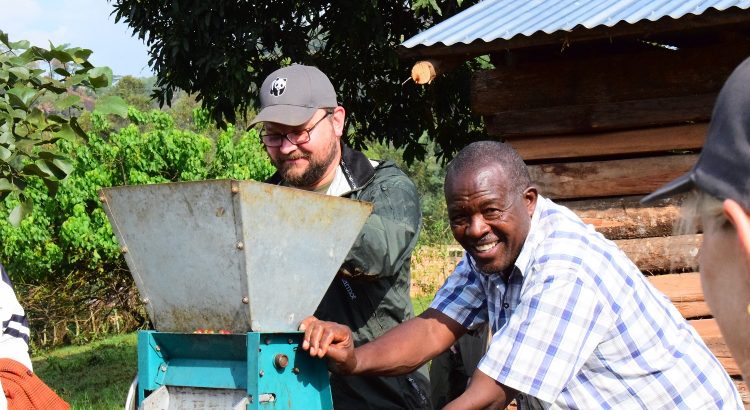
CTPH recently received funding from WWF-Switzerland to launch a coffee enterprise to benefit the Buhoma community adjacent to Bwindi Impenetrable National Park, home to nearly half of the world’s remaining mountain gorillas. In July 2017, a small group of Natural Habitat Adventures travelers were the first to have the opportunity to visit the Gorilla Conservation Coffee project on a “coffee safari.”

Coffee safari in Uganda

Coffee is a great crop to grow on the border of gorilla habitat because, so far, mountain gorillas have not caught on to the wonders of drinking coffee. Coffee and tea plantations can create a buffer between the forest and food crops, because the gorillas entering the plantations will turn back, thinking that there is nothing for them to feed on in the area.

The coffee farmers in Buhoma have formed a cooperative to sell fresh coffee beans at a premium to Gorilla Conservation Coffee. The project has invested in processing equipment that gets the beans to the point of being ready to roast. The beans are then sent to Kampala, the capital city of Uganda, where they are roasted and packaged for sale. The income from the coffee supports local farmers and CTPH’s work protecting critically endangered mountain gorillas.

Natural Habitat Adventures travelers sampling coffee in Uganda

At Natural Habitat Adventures, we are proud to partner with an organization like WWF that looks for opportunities across the globe to provide seed funding that results in long-term, sustainable solutions like this that benefit both people and wildlife. Gorilla trekking in Uganda is one of the many ways that you can support innovative conservation projects like these.

And hey—the world can always use more delicious coffee, right?

Uganda Gorilla Conservation Coffee

© Gorilla Conservation Coffee

Dr. Gladys Kalema-Zikusoka’s Gorilla Conservation Coffee expands to new markets while protecting the endangered mountain gorillas in Bwindi Impenetrable Forest

By by  Growth Africa

In 2017, we had the pleasure of talking to Dr. Gladys Kalema-Zikusoka, Founder, Gorilla Conservation Coffee. She was going through the Growth Africa Accelerator programme in Uganda and we were inspired by how she had collaborated with farmers in Bwindi to train them on how to grow and process quality coffee while protecting the mountain gorillas that dwell in the Bwindi Impenetrable forest.

We caught up with Dr. Kalema-Zikusoka recently to find out more about the growth and impact of Gorilla Conservation Coffee as well as their expansion to new markets and what is in store for the future.

 Update on Gorilla Conservation Coffee

Back then, Gorilla Conservation Coffee was engaging 75 farmers and now the number of farmers has grown to 500. They have embraced a model farmer network with support from Solidaridad where 25 model farmers each mentor 20 farmers. The number of women farmers being engaged has also grown from only 5 women in 2017 to 120 women, a good number of which are women youth coffee farmers, which was not the case before. To extend the impact in the community, Gorilla Conservation Coffee is also working with reformed poachers who have handed their tools to the Uganda Wildlife Authority and have embraced coffee farming.

Dr. Gladys Kalema-Zikusoka with some of the coffee farmers in Bwindi area

How they overcame the challenge of not having a major market for green coffee

The biggest challenge they faced in 2017 was not being able to sell green coffee at a high price because most customers were more willing to buy roasted branded coffee at a high price as compared to the green coffee, which is more available on the market. However, Dr. Kalema-Zikusoka says they have made great progress in that area,

“One thing GrowthAfrica taught us was to really understand your customer so that you are able to realise the full potential of your business. We have been able to segment our customers and find those who are willing to buy green coffee at a high price. We now have a market in America. The customers buy the green coffee then and roast it and co-brand it in America and New Zealand as Gorilla Conservation Coffee.”

They have also had interest from a leading roaster in Holland and there is a lady who is hoping to market the coffee in different countries. What made the difference is they have found the right specialty roasters and traders who understand the story behind the coffee, the quality of it and they are willing to buy it at a higher price.

Current Challenges

The biggest challenge Gorilla Conservation Coffee faces now is not being able to satisfy the demand for their coffee which is higher than the supply.

“Now that we have created a market and built a strong brand that people know about, we do not have enough working capital to be able to buy coffee from farmers so that we satisfy the growing market.”

They not only sell their coffee in Uganda but also in America, New Zealand, South Africa, Netherlands, France, Switzerland and Kenya.  Dr. Kalema-Zikusoka added that they are currently looking for affordable financing so that they have working capital to buy coffee from the farmers and satisfy the demand.

Another major challenge they are facing is having to compete with brands that put gorillas on their packaging, yet they are not working with gorillas and farming communities adjacent to gorilla habitats. She admits that these brands confuse the market and there is need to differentiate themselves from them. To address this, they have partnered with Solidaridad on a plan to get special certification for coffee brands that support gorilla conservation.

 Global Recognition

Gorilla Conservation Coffee has received a lot of global recognition since 2017. In 2018, Coffee Review ranked them among the top 30 coffees in the world giving them a total of 92 points. That raised their profile globally and created opportunities for them to get more orders because the coffee is good and the story behind the coffee is great.

They have also grown their number of outlets from 30 to 60. The Gorilla Conservation Café in Entebbe is very popular especially among tourists and expatriates who get to sample the coffee before they buy. The café has experienced baristas and Dr. Kalema-Zikusoka noted that more Ugandans are drinking coffee which has helped them create a community around the coffee.

Dr. Gladys and team at Uganda’s first Gorilla Conservation Cafe in Entebbe

In September 2017, the UNEP Switch Africa Green (SAG) awarded Gorilla Conservation Coffee a Seed Award Winner. As part of the award prize, they got help in perfecting their business plan and they were put in contact with potential partner organisations.

In 2018, Dr. Kalema-Zikusoka was the second African to win the Sierra Club Earthcare Award, which has only been won before by Prof. Wangari Maathai. She won the award in recognition of her unique approach to environmental conservation.

In August 2019, they emerged 2nd at the Startup Africa Road Trip Awards. This award opened up an opportunity to visit Italy in 2020 where they will meet potential buyers and investors.

In February 2020, Dr. Kalema-Zikusoka’s Conservation Through Public Health (CTPH) which created the Gorilla Conservation Coffee social enterprise won the prestigious St. Andrews Prize for the Environment in recognition of their significant contributions to environmental issues and concerns through the One Health approach with a focus on sustainability, conservation, biodiversity and community development.

Conservation Through Public Health was announced the 2020 St. Andrews Prize for the Environment winner

The winning prize of USD 100,000 from the award will enable Conservation Through Public Health (CTPH) to replicate a community-based health and conservation model in the Democratic Republic of Congo (DRC).

Impact from the GrowthAfrica Accelerator

Dr. Kalema-Zikusoka was motivated to join the GrowthAfrica Accelerator back in 2017 because she wanted to get better at running the business and learn how to attract investors.

“At the time, we only had one investor, World Wildlife Fund for Nature Switzerland and we wanted to connect with more potential investors. We liked the fact that GrowthAfrica makes you more prepared for investors and shares practical tips on how to attract the right impact investors.”

She also appreciated the recognition that GrowthAfrica has given them through profiling them and raising awareness on Gorilla Conservation Coffee saying it has contributed to building their brand and attracting support.

GrowthAfrica is also supporting them in registering as a B-Corp company which Dr. Kalema-Zikusoka admits will help to raise their profile in America.

What’s in the future?

The future is bright for Gorilla Conservation Coffee. They plan to engage as many farmers as possible around the Bwindi area and strengthen tracking along their triple bottom line, which is social impact, financial impact and environmental impact including reduction in poaching. They are also looking into scaling to other countries especially countries with communities that have gorilla habitats like Rwanda, Cameroon and Democratic Republic of Congo.

Related articles: https://growthafrica.com/coffee-farming-saving-mountain-gorillas-uganda/

https://growthafrica.com/disruptive-women-led-ventures-africa-meet-dr-gladys-kalema-zikusoka/

Tags: 

Meet Gladys Zikusoka, a wildlife veterinarian using coffee to conserve gorillas

By Nicholas Asingwire, Sautitech on 27 July 2018

In 2003, Dr. Gladys Kalema Zikusoka started CTPH or Conservation Through Public Health.  She had 8 years ago graduated from the Royal Veterinary College, London with a Bachelor of Veterinary Medicine, scoring a job at Ugandan Wildlife Service, now the Uganda Wildlife Authority (UWA), as Uganda’s first wildlife veterinary officer.

With half a decade of experience in dealing with wildlife, Dr. Kalema-Kizusoka had learnt that animals, especially gorillas which share 98 percent of DNA with human beings, were increasingly getting exposed to danger, having gone through two traumatic periods of scabies outbreak: in 1996 and between 2001 and 2002. Conservation Through Public Health was started to offset such tragedies.

Dr. Kalema-Zikusoka had also spearheaded the first wildlife translocation to restock Uganda’s national parks following years of poaching during Uganda’s civil wars. And in that same year of starting CTPH, she obtained a Master of Veterinary Medicine from North Carolina State University after conducting research which demonstrated the high risk of tuberculosis (TB) transmission between people and mountain gorillas.

At CTPH, Dr. Zikusoka and her team of 15 continue to promote gorilla conservation by applying a number of methods aiming at facilitating the co-existence of human beings, wildlife, and livestock in and around protected areas in Africa.

After two years of existence, CTPH built a Gorilla Research Clinic in Buhoma, Bwindi Impenetrable National Park’s main tourist site, and it has since been expanded to a larger Gorilla Health and Community Conservation Center. At this facility, the CTPH website shows, tourists are given a behind the scenes tour of gorilla conservation. CTPH officials do this by explaining “our programs including gorilla health monitoring, community health, and livelihoods.”

A sip for gorilla survival

Gazetted in 1991, Bwindi Impenetrable National Park, the home to almost half the world’s population of mountain gorillas, is surrounded by a community of coffee growers because of being on a high altitude, covered with fertile soils. But after visiting the area several times, Dr. Gladys Kalema-Zikusoka discovered that most of these farmers were not getting a fair price for their harvests.

From this, she realized, the farmers “were struggling hard to survive, forcing them to use the national park to meet their basic family needs for food and fuelwood.”

Something had to be done. So, in 2015, Gorilla conservation coffee, or GCCoffee, was started. The resources to put the project together were obtained from CTPH and World-Wide Fund (WWF) Switzerland, the largest environmental and conservation organization in Switzerland. Organized as a charitable foundation, WWF Switzerland is part of the global WWF network, whose influence extends to around 1,300 conservation projects in over 100 countries around the world, according  to Optimizely.

GCCoffee is a social enterprise and it kicked off with seventy-five coffee farmers, who only grow arabica coffee. The number has since grown to eighty-five, prompting the formation of a group to unite them called Bwindi Coffee Growers Cooperative.

To be part of the cooperative, Dr. Kalema-Zikusoka says, a farmer must have at least 2 acres of  arabica coffee. This is inspired by the fact that they want to only to take on farmers who are ready to put in the work and take coffee farming seriously.

Some of the farmers like Vincent Butamanya, 63, who is the vice chairperson of the Bwindi Coffee Growers Cooperative has a farm that sits on 30 acres of land with about 16,000 Arabica trees of below 20 years. GCCoffee says it is working closely with him to ensure that he produces “at least 16 metric tons of coffee in the coming seasons.”

The social enterprise has a plan of coordinating at least twenty of the farmers to have their farms turned into models so that the rest can emulate them. So far, according to Dr. Kalema-Zikusoka, one of the farmers has been given a loan to reinforce his plantation.

Being the biggest buyer of the coffee produced by these farmers, GCCoffee ensures that farmers are walked through the best farming practices such that they have good quality coffee. Most of the coffee is bought in cherry form, according to Dr. Kalema-Zikusoka, but for the farmers who are able to process it further, they are allowed to add value to it for more rewards.

Only two farmers have poppers currently, but there are plans to acquire more of these, she told me. The team of GCCoffee organizes workshops and, in some cases, they move from farmer to farmer to conduct sensitization.

Gorilla Conservation Coffee currently deals with farmers growing only Arabica coffee. According to Dr. Kalema-Zikusoka, growing Arabica coffee requires more input than Robusta (which is also widely grown in the country); they knew that by dealing with Arabica coffee growers, they would be working with committed farmers.

That being said, Arabica is generally better than Robusta in many aspects, including market demand, price on the market. The only difference is that Robusta is easier to grow and it can be cultivated in different areas. The veterinarian, however, told me that Robusta will also be supported with time since some people like a mixture of both.

One sip at a time

To add value to the coffee and create a powerful brand for it, GCCoffee opened up a coffee shop where they sell the coffee. They have also partnered with multiple establishments, including hotels, airports, tourist resorts, national parks and gift shops to distribute the coffee.

Their first coffee blend has been named Arabica Kanyonyi Coffee after Kanyonyi, the former lead silverback gorilla of Mubare Gorilla Group, the first group habituated for tourism at Bwindi Impenetrable National Park, Uganda, who died in 2017. Dr. Kalema-Zikusoka told me she knew him from his young age. He was 21. The coffee can be bought by visiting various locations in  Uganda, or online when in Uganda, USA, New Zealand and Canada.
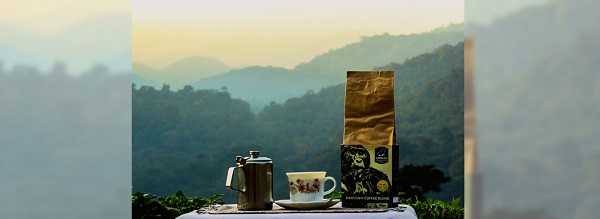
A pack of Arabica Kanyonyi Coffee (right) is seen placed besides a tea container and a cup. (Picture: GCCoffee)

A pack of Arabica Kanyonyi Coffee (right) is seen placed besides a tea container and a cup. (Picture: GCCoffee)

I met Dr. Gladys Kalema-Zikusoka recently at their first coffee shop, Gorilla Conservation Café, located at Plot 19, Portal Rd, Entebbe. On that afternoon of July 4, Deborah, a happy-go-lucky barista at the facility who declined to give me her last name, walked me through the different types of coffee they make. After the insightful lecture, we concluded that I should go for latte macchiato, a combination of milk and Espresso, or concentrated coffee, as I wait for the doctor to arrive for this interview. The coffee shop was opened in December 2017. It is positioned at an exclusive building away from the noise, making it a safe go-to place for people looking to have peace of mind or a quiet rendezvous.
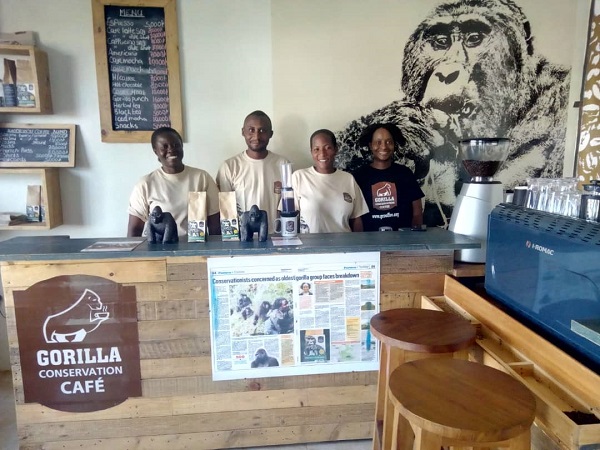
GCCoffee

The writer (second from left), Dr. Gladys Zikusoka (extreme right) and the baristas pose for a picture at Gorilla Conservation Coffee Cafe in Entebbe

Partnerships and challenges

Gorilla Conservation Coffee is currently collaborating with seven organizations, namely: WWF Switzerland, UWA, CTPH, Nucafe, Switch African Green-SEED (SAG-SEED), Uganda Coffee Development Authority (UCDA) and Bwindi Coffee Growers Cooperative.

These organizations have provided support in different ways. For instance, WWF Switzerland has offered a loan to support coffee farmers, GCCoffee has won a SAG-SEED award and the latter is helping the former in developing a business proposal to obtain funding, Nucafe processes the coffee and UCDA has trained GCCoffee staff.

Arabica Kanyonyi Coffee has so far been sold, through both crowdfunding and other online platforms in Uganda including Jumia and GCCoffee website and local outlets in Uganda and other countries including New Zealand and since June this year, USA and Canada. The choice of countries has been based on friends and tourists who liked the coffee and were willing to market it in their countries.

Just as any other starting venture, GCCoffee has encountered a series of challenges. One of the key challenges has been setting themselves apart as a different brand than what people have been seeing on the market.

“One of the first challenges was describing to people that our coffee is different from other coffees on the market,” Dr. Kalema-Zikusoka told me that afternoon, adding that there are many other coffee dealers who “label themselves as gorilla coffee” but are not necessarily into conservation. They are just using the name as a marketing tool.

“Differentiating ourselves from those other companies has been our first challenge but we are hoping that our marketing is improving,” she said. According to her, “unless someone really knows about conservation, they sometimes confuse us (coffee brands).”

Another issue they have had to deal with is “getting the farmers to produce quality coffee”, but she says they are “addressing it through showing them that we can only buy good coffee from you.”

“That’s already enough to change the way someone treats their coffee,” she said. “They know that they want to get a good price, they want to pay school fees.”

The design of the program also reflects that farmers are shareholders in the venture so they have to work hard to protect it. Farmers, Dr. Gladys told me, are informed from the word go that GCCoffee is not “a donor project or NGO, this is a business; we have a loan we’ve to pay back so we’re all in it together.”
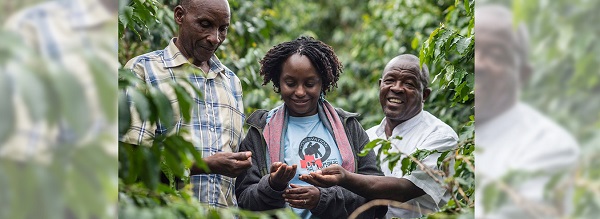
Dr. Gladys Kalema-Zikusoka with farmers (Picture: Jo-Anne McArthur)

This style of operation has helped build loyalty from farmers, preventing them from selling coffee to other dealers. Farmers also like the initiative since it has helped them to build a brand and their coffee is bought by GCCofee at a higher price than the ordinary market price.

GCCoffee is also still facing challenges of raising funds. Dr. Kalema-Zikusoka says that it’s difficult to find investors who value the conservation as much as the finance. “There are not many out there. So, yer, raising funds is difficult as well. Raising funds is not easy as well,” she confessed. They have also not got direct financial support from the Ugandan government apart from non-monetary relationships they have with government agencies dealing in tourism like Uganda Tourism Board and UWA. This kind of relationships involves allowing them to sell their products at national parks and showcasing their products at events organized by these organizations.

Dr. Kalema-Zikusoka says that efforts are underway to join Sustainable Coffee Challenge-Conservation International from which they hope to raise “our fundraising chances.” They have also previously participated in an accelerator program organized by GrowthAfrica. To ground herself in non-profit management and business, she has also obtained a certificate in the management of non-profit organizations, from Duke University and in 2016 she got a Master of Business Administration from University of Milan and Tangaza University College, in Kenya.

Her work in the past 23 years has seen her projects scoop multiple awards and get recognized by powerful organizations like the World Economic Forum, Whitley Awards, International Scientific Seed Magazine, World Summit Award, Conde Nast Traveler Magazine and Wings World Quest Women of Discovery Humanitarian Award.

She has also been featured in documentaries in National Geographic, Animal Planet, MNet and Uganda Television.
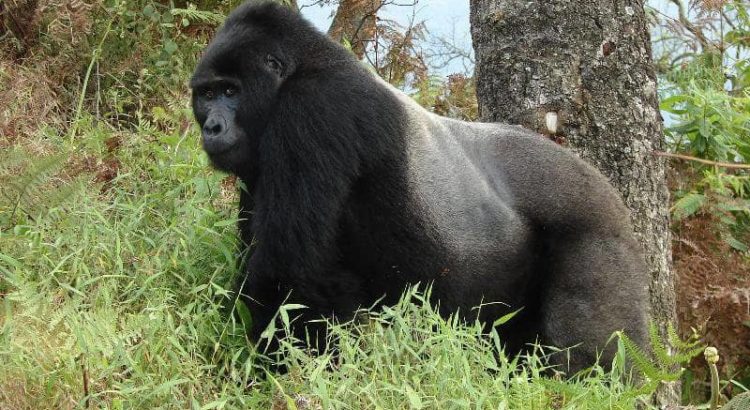
Dr Gladys’ tribute to Kanyonyi

It is with great sadness to inform you about the loss of one of my favorite gorillas in Bwindi ImpenetrableNational Park, Kanyonyi, the lead silverback of Mubare group who died on Friday night.

Kanyonyi first fell off a tree, but while he was recovering after treatment, a lone silverback fought with him because he wanted to take over his group. Kanyonyi in his weakened state was not able to put up a good fight, and sustained many injuries, which though they were healing, left him weaker than usual. When I last visited Kanyonyi he was eating quite well, but still limping and walking slowly, with one adult female gorilla, Karungyi and her baby keeping close by his side. He made a nest in front of us to take a comfortable morning nap, and we were able to record a brief video. I would like to thank the Uganda Wildlife Authority park staff  and Conservation Through Public Health (CTPH) team who have kept a close watch over Kanyonyi to prevent him from having more interactions with the lone silverback until he was strong enough. Fighting amongst free ranging gorillas is considered to be part of their normal behavior patterns and enables natural group succession.Conservation Through Public Health participated in the post mortem yesterday, which confirmed the major cause of his death to be an infection in the hip joint after the fall.

I have known Kanyonyi since he was a baby, when he was born 20 years ago. In 1998, I successfully operated on his older sister, then a juvenile gorilla called Kahara when she had a rectal prolapse. She was named Kahara because she liked to babysit him. Kanyonyi became the lead silverback of Mubare gorilla group in 2012, after his father, Ruhondeza died. Ruhondeza was the lead silverback of the first gorilla group to be habituated for tourism in Bwindi Impenetrable National Park. Kanyonyi was a playful young silverback who liked interacting with human visitors. Over the past five years, Kanyonyi has kept the Mubare gorilla group together and enabled it to grow through attracting many females.

When we started the Gorilla Conservation Coffee social enterprise in 2015 to support farmers living around Bwindi, we decided to name our first coffee blend after Kanyonyi who symbolizes the gorilla conservation efforts at Bwindi Impenetrable National Park since tourism began in 1993.

May his legacy continue through stories, memories and the Kanyonyi coffee blend.