How Gorilla Conservation Coffee Became A Win-Win
 By Bamuturaki Musinguzi
Correspondent
Nation Media Group
SOURCE: MONITOR | 7 Dec 2025
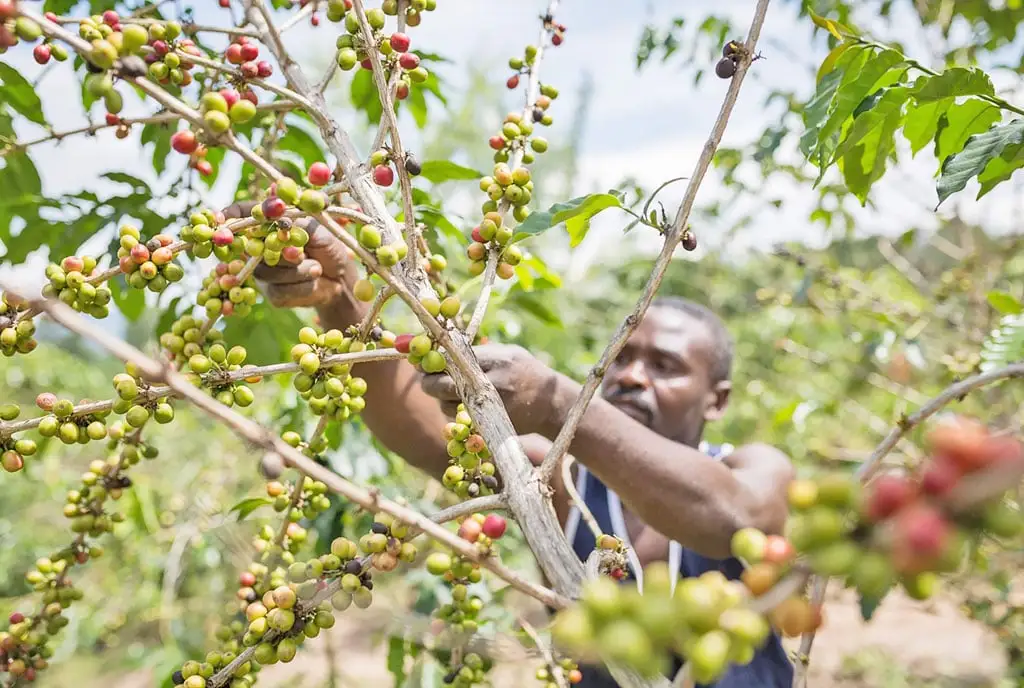
John Ninkunda and George Katemba are all praises for the Gorilla Conservation Coffee project that was started by the non-governmental organisation Conservation Through Public Health (CTPH) to support the organic Arabica coffee farmers around Bwindi Impenetrable National Park (BINP) to earn higher incomes from their farms.
Ninkunda is a 53-year-old mixed farmer in Rushambya Cell, Southern Ward, Butogota Town Council, Kanungu District in southwestern Uganda. He grows Arabica coffee, tea, cassava, maize and potatoes on his three and half acres of land. Married with five children, Ninkunda suffered a stroke and he has been in a wheelchair for the past nine years. He was among the first farmers to join the gorilla coffee project in 2015.
“When we harvest the coffee, we sort it and pour water into the container. The best coffee will stay at the bottom of the water, while the bad coffee will float on top. They pay us after two or three days according to the kilograms they have bought,” he says.
In a good season, he can harvest between 300 and 350 kilogrammes of Arabica coffee from one and a half acres, earning between Shs900,000 and Shs1,050,000.
“I am very happy and pleased with this project. We are able to earn money to pay school fees for our children. Organic farming is the best because you will be selling high quality coffee at a high price. Those with large tracts of land are earning lots of money and are building houses,” Ninkunda says, adding:“Growing coffee is protecting our environment, which results in rain that nourishes our gardens and good harvests.”
Katemba, 51, is married with four children. He is also a mixed farmer in Rushambya Cell with two acres of land. He grows coffee on one acre, and bananas and tea on the rest of the land.
Harvesting anywhere between 200 and 300 kilogrammes of coffee, he earns between Shs600,000 and Shs900,000 every season.
“We sell them organic coffee and we don’t spray it because we were trained not to. If I had more land, I would grow more coffee. I am pleased with this project because I earn money immediately CTPH buys my coffee. Payment does not take many days like it is with other buyers. With the income from coffee, I pay school fees for my four children, and buy food that I do not grow plus other items for my household. Because the money from the coffee project is timely and predictable, I am able to buy goats and other forms of wealth,” Katemba says.
Pursuit of fairness
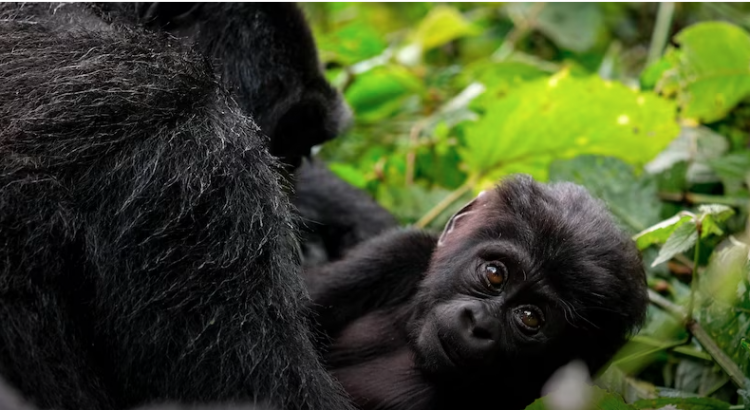
CTPH started up a social enterprise called Gorilla Conservation Coffee in response to a realisation that smallholder coffee farmers around BINP, home to the critically endangered mountain gorillas, were not getting a fair price for their coffee. This meant they had to depend on the gorillas’ habitat to meet their basic needs for food and fuel wood, putting the wildlife, habitats and community members all at risk.
A donation from the sale of the coffee goes towards supporting the conservation and public health programmes in the community.
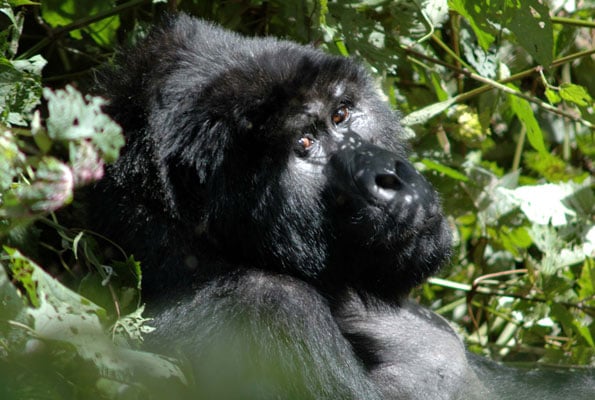
Benjamin Tumuramye, a CTPH Gorilla Conservation Coffee extension worker, says gorilla coffee is a social enterprise of CTPH.
“Its main objective is to conserve gorillas, their habitants, and improve the people’s livelihoods by encouraging the people living around the outskirts of BINP to grow coffee of which Gorilla Conservation Coffee pays them a premium price, which is always above the market price,” he says.
“We offer free coffee management training to farmers and bring the market nearer to the farmers. We provide shade trees to farmers with the aim of mitigating climate change. These are environmentally friendly trees that encourage the farmers to grow in their coffee plantations. We started with over 100 coffee farmers in 2015, and today, we have 630 farmers working directly with, us of which 230 are women. We are encouraging women to take part in coffee farming. We focus on small-holder farmers by helping them to bring the market closer to them,” he adds.
Tumuramye says when one buys a bag of Arabica Kanyonyi Coffee Blend, “your purchase helps pay an extra $50 (about Shs176,000) per kilogramme over market trading prices to our farmers, and $1.50 (Shs5,000) back to CTPH’s continued efforts in maintaining the healthy livelihoods of Bwindi.”
Tumuramye further explains that their farmers practice organic farming in a bid not to contaminate the environment and the industrial agro-chemicals are some of the causes of cancer and other diseases.
“Our farmers have embraced this coffee because of the premium prices and training that we offer to them. When they grow their coffee and we pay them a premium price, they earn money to take their children to school, buy food, and their incomes have improved. Since they began earning from this coffee, they no longer go into the forest to hunt for game meat, wild fruits, and cut down trees for charcoal burning. And this has helped to reduce human-wildlife conflicts,” Tumuramye said. Tumuramye says their coffee is single origin, medium roasted 100 percent Arabica coffee from Bwindi.
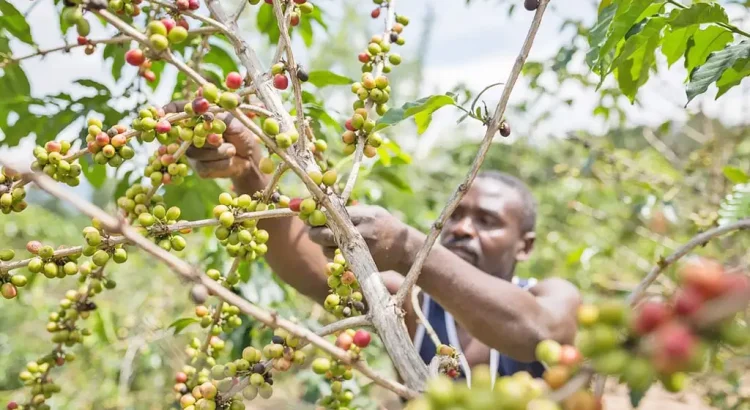
“Our coffee is well processed and selective hand picking is done while harvesting it. They harvest coffee twice in a year during the two coffee seasons from February to May, and August to November,” he says.
CTPH approach
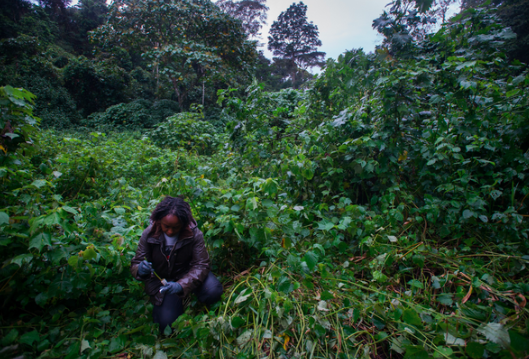
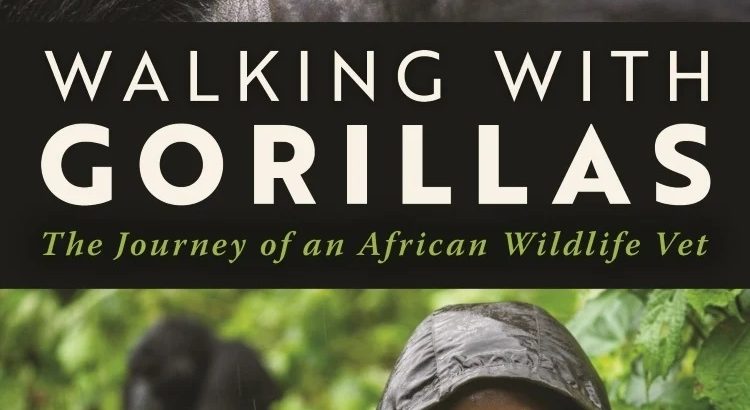
In her memoir, Walking With Gorillas, Dr Gladys Kalema-Zikusoka writes that when they started CTPH in 2003, the idea of addressing human, animal, and environmental health together was just emerging.
“Very few understood that people and animals can make each other sick and that, in turn, this can have enormous impacts on conservation, public health, and sustainable development. At CTPH we developed a multidisciplinary approach to address these issues, but because it didn’t fit into a neat category it was difficult for donors and policy makers to understand the potential benefits.”
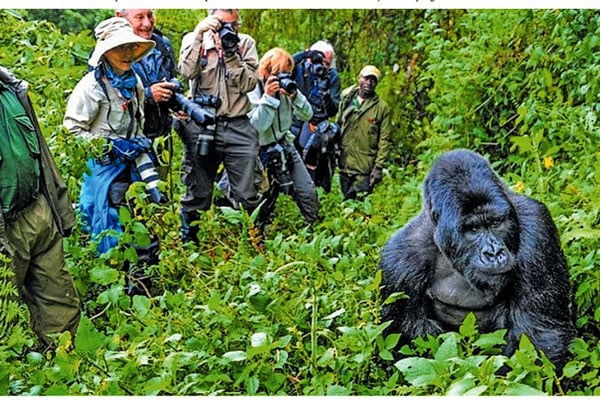
CTPH promotes biodiversity conservation by enabling people, the endangered mountain gorillas, other wildlife, and livestock to co-exist through improving their health and livelihoods in and around Africa’s protected areas. CTPH’s projects are founded on the belief that conserving wildlife must go hand-in-hand with supporting neighbouring communities, providing public health and hygiene services, as well as information on the conservation.
The organisation was established in recognition of the major risks associated with humans living in close quarters with wildlife, particularly with closely related primates, including the spread of zoonotic diseases.
CTPH had to find other ways to sustain its conservation efforts. They founded the social enterprise Gorilla Conservation Coffee to protect endangered gorillas by creating prosperity for the local human communities, Kalema-Zikusoka writes.
She adds: “Since we started Gorilla Conservation Coffee in 2015, we have steadily increased the volume of coffee purchased from farmers living around BINP. To date, we have bought more than 100 tonnes of premium Arabica coffee from our partner farmers. This represents not just bags of coffee, but real livelihoods transformed. ”
Kalema-Zikusoka says farmers are central to CTPH’s efforts.
“By offering them a reliable, above market price, we have helped stabilise household incomes, improved their ability to support their families, and reduced the pressure to enter the forest to meet basic needs.
Every kilogramme we purchase is a step toward strengthening community wellbeing, and in turn, strengthening gorilla conservation where a donation from every coffee bag sold is put aside to sustain community health, gorilla health and conservation education programmes of Conservation Through Public Health NGO.”
Asked how the project is contributing to climate change mitigation, Kalema-Zikusoka says: “Gorilla Conservation Coffee was designed from the start to protect gorillas by supporting the people who share a landscape with them. But over time, it has also grown into a quiet force for climate resilience.”
She adds: “First, by creating a stable market for high-quality coffee, we encourage farmers to continue planting and maintaining shade-grown coffee, which thrives under the forest canopy. This farming method protects biodiversity, improves soil structure, prevents erosion, and stores significantly more carbon than sun-grown alternatives.”
“Second, by reducing farmers’ reliance on the park for firewood, bush meat, or land for cultivation, we help minimise deforestation and forest encroachment, which are major drivers of carbon emissions. Keeping Bwindi’s forest intact means keeping one of Uganda’s most important carbon sinks healthy.
“Third, we provide training in climate-smart agriculture, including mulching, organic fertiliser use, water conservation, and better post-harvest handling. These practices not only improve yields but also strengthen the landscape against drought and extreme weather, both growing threats in the region.”
Tea vs coffee
The recent drop in the price of tea is forcing farmers in Kanungu District to abandon tea for other cash crops, especially coffee. Ninkunda says in 2024 the price of tea fell to Shs100 per kilogramme, down from Shs500 about three years ago.
“The price has now increased to Shs350 per kilogramme. We are now abandoning growing tea. Some farmers are uprooting their tea plantations and replacing tea with coffee and other crops.” Katemba concurs, saying the “drastic price fall of tea has brought us problems.”
Winning hearts
Gorilla Conservation Coffee won the top prize in the Food category at the 2024 PEA (People. Environment. Achievement.) Awards held at The Savoy Hotel London in England in June.
The judges were bowled over by the way Kalema-Zikusoka is giving smallholder farmers on the outskirts of Bwindi access to global agricultural commodity markets, increasing incomes and resilience while reducing threats to forest resources and mountain gorillas.
“CTPH’s biggest contribution to the communities surrounding Bwindi is improving their health and livelihoods, which in turn fosters a greater commitment to conservation. By providing health services through Village Health and Conservation Teams, promoting sustainable agriculture, and supporting alternative livelihoods through Gorilla Conservation Coffee, we’ve empowered these communities to live in harmony with the gorillas and the environment,” Kalema-Zikusoka says.