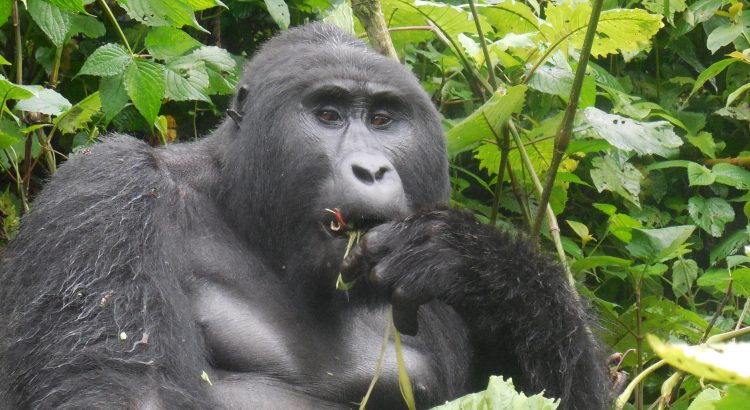
Dr Gladys’ tribute to Kanyonyi

It is with great sadness to inform you about the loss of one of my favorite gorillas in Bwindi ImpenetrableNational Park, Kanyonyi, the lead silverback of Mubare group who died on Friday night.

Kanyonyi first fell off a tree, but while he was recovering after treatment, a lone silverback fought with him because he wanted to take over his group. Kanyonyi in his weakened state was not able to put up a good fight, and sustained many injuries, which though they were healing, left him weaker than usual. When I last visited Kanyonyi he was eating quite well, but still limping and walking slowly, with one adult female gorilla, Karungyi and her baby keeping close by his side. He made a nest in front of us to take a comfortable morning nap, and we were able to record a brief video. I would like to thank the Uganda Wildlife Authority park staff  and Conservation Through Public Health (CTPH) team who have kept a close watch over Kanyonyi to prevent him from having more interactions with the lone silverback until he was strong enough. Fighting amongst free ranging gorillas is considered to be part of their normal behavior patterns and enables natural group succession.Conservation Through Public Health participated in the post mortem yesterday, which confirmed the major cause of his death to be an infection in the hip joint after the fall.

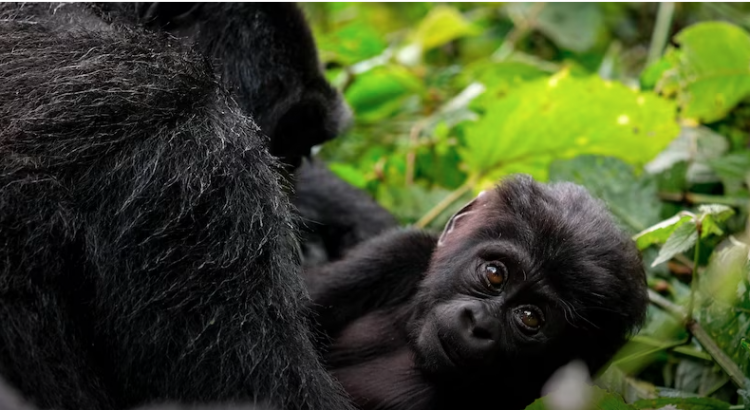
I have known Kanyonyi since he was a baby, when he was born 20 years ago. In 1998, I successfully operated on his older sister, then a juvenile gorilla called Kahara when she had a rectal prolapse. She was named Kahara because she liked to babysit him. Kanyonyi became the lead silverback of Mubare gorilla group in 2012, after his father, Ruhondeza died. Ruhondeza was the lead silverback of the first gorilla group to be habituated for tourism in Bwindi Impenetrable National Park. Kanyonyi was a playful young silverback who liked interacting with human visitors. Over the past five years, Kanyonyi has kept the Mubare gorilla group together and enabled it to grow through attracting many females.

When we started the Gorilla Conservation Coffee social enterprise in 2015 to support farmers living around Bwindi, we decided to name our first coffee blend after Kanyonyi who symbolizes the gorilla conservation efforts at Bwindi Impenetrable National Park since tourism began in 1993.

May his legacy continue through stories, memories and the Kanyonyi coffee blend.

SAG-SEED AWARD WINNER 2017

GCCoffee is a for-profit social enterprise aiming to improve livelihoods of coffee farmers and protect mountain gorillas in the area. GCCoffee buys coffee at a premium, processes and sells it as a branded roasted coffee, whose purchase includes a donation to Conservation Through Public Health (CTPH).

GCCoffee pays a premium price to enable marginalised small-holder coffee farmers living in remote sub-counties bordering Bwindi Impenetrable National Park to improve their lives, which keeps them from resorting to damaging the forest through activities like poaching and removing resources like wood. This in turn helps protect the gorillas and their habitat.

GCCoffee also provides training and capacity building to farmers to improve sustainable agriculture practices. GCCoffee targets coffee drinkers and tourists via shops, tourist lodges, airports and international distributors to market and sell coffee.

See details here https://www.seed.uno/awards/all/2017/gorilla-conservation-coffee.html

Episode 7: Coffee with A Purpose

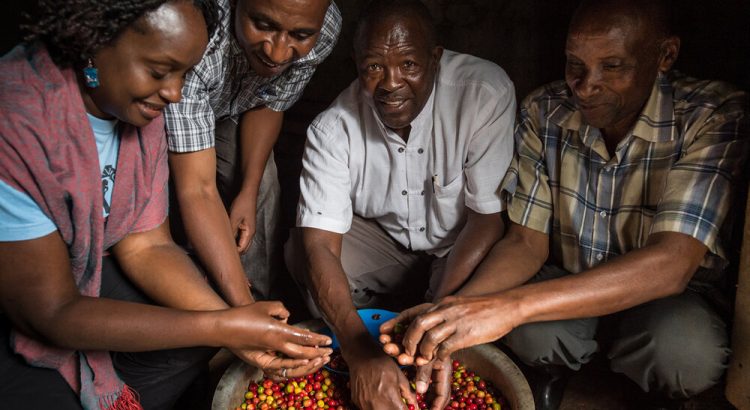
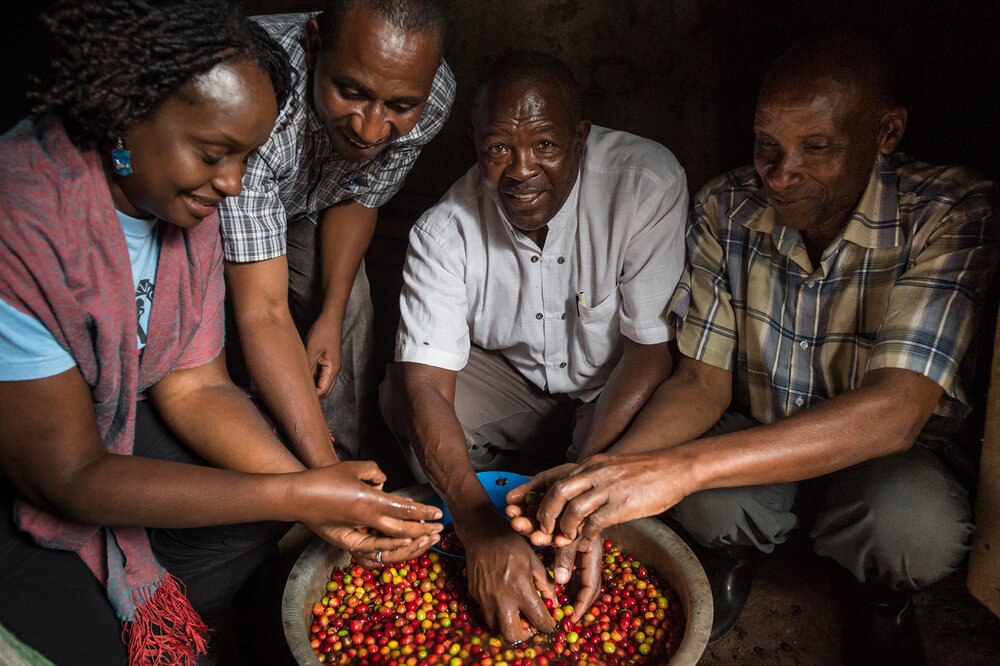
Dr. Gladys Kalema-Zikusoka meets with local farmers who produce the beans for Gorilla Conservation Coffee in Uganda. Photo courtesy of Gorilla Conservation Coffee.

Coffee is not only consumed and beloved around the world, but it is also produced in many countries ranging from Costa Rica and Indonesia to Uganda, Brazil and Laos. Though coffee agriculture has not always been equitable for the farmers, there are innovators changing that. In this episode, we talk with two entrepreneurs who have found a way to make coffee into a sustainable and sustaining industry by creating fair-trade projects that not only provide producers with living wages, but also support local conservation and community development efforts.

Kathryn met our first guest, Dr. Gladys Kalema-Zikusoka, on a trip to Uganda in 2019. Not only is she the first Wildlife Officer of the Ugandan Wildlife Authority, but she is also the founder of an NGO called Conservation Through Public Health that works with communities living around Bwindi Impenetrable Forest to promote gorilla conservation efforts there. She and her husband, Lawrence, founded Gorilla Conservation Coffee to help farmers living around the park support themselves by growing and selling coffee at fair prices.

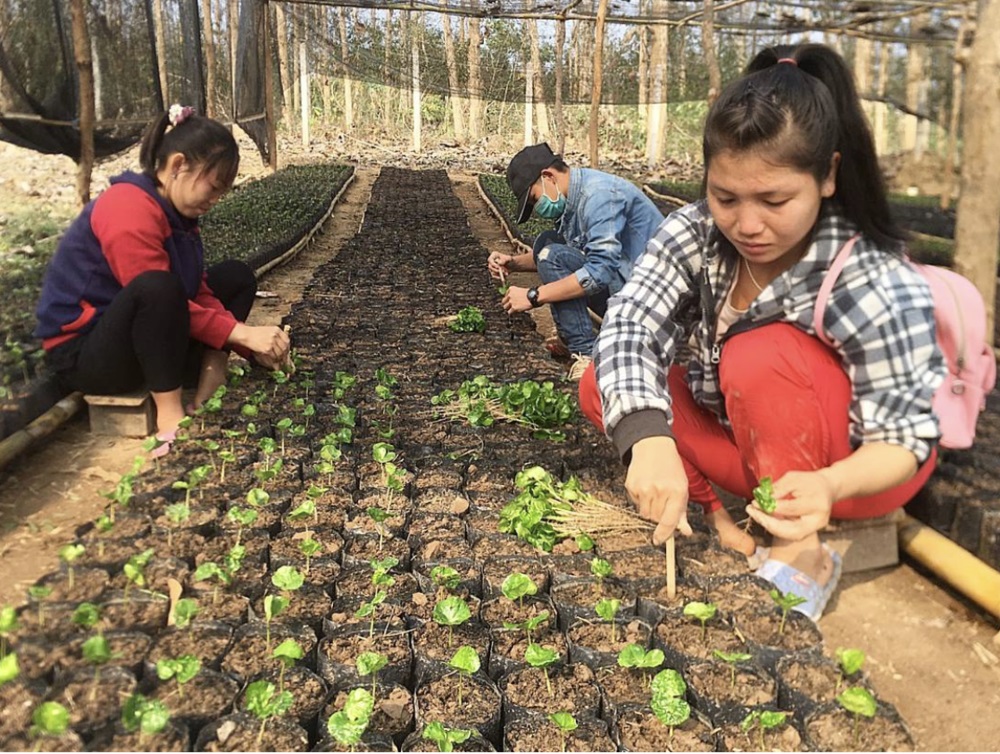
Among other projects, folks at Saffron Coffee in Laos cultivate coffee plants in a nursery to give to regional farmers as they get started. Photo courtesy of Saffron Coffee.

Next, Eric calls Todd Moore, the director of Saffron Coffee. Along with a lovely little cafe in Luang Prabang, Laos, Saffron Coffee was founded in 2006 to help farmers in the hill villages of northern Laos shift from growing opium to farming coffee. Today, they work with more than 800 farmers in 25 of these villages. That success didn’t come without challenges, though, which we learn during our conversation.

Follow Gorilla Conservation Coffee on Instagram @gorillaconservation_coffee, and Saffron Coffee @saffroncoffee. And as always, be sure to check out our own Instagram feed @conscioustravlerpod.

The extraordinary story of Uganda’s first wildlife vet


Growing up under the reign of military dictator Idi Amin, Dr Gladys Kalema-Zikusoka had to create the position of wildlife veterinarian for herself.

One of her greatest achievements has been finding the connection between the health of the villages on the edge of the Bwindi Impenetrable National Park, and the critically endangered mountain gorillas inside.

Guest: Dr Gladys Kalema-Zikusoka, Ugandan veterinarian and founder of Conservation Through Public Health.

Relevant links:

Walking with Gorillas: The Journey of an African Wildlife Vet

Broadcast 

Source: ABC.net

Credits

Jessie Kay, Producer